CompTIA A+ Certification: What It Is and Who Needs It
This CompTIA A+ certification guide covers everything you need to pass both exams, build a realistic study plan, and understand the career opportunities the credential opens. CompTIA A+ validates foundational IT skills across hardware configuration, operating system administration, network troubleshooting, security implementation, and mobile device management. It is the industry-standard entry credential for technical support professionals worldwide, with over one million active certification holders globally.
The certification is vendor-neutral, covering technologies from Microsoft, Apple, and Linux, making certified professionals valuable across any organizational environment from small startups to large enterprises. Unlike vendor-specific credentials that focus on a single manufacturer's products, A+ delivers universal technical knowledge you can apply wherever you work.
A+ consists of two required exams: Core 1 (220-1101), which covers hardware and networking fundamentals, and Core 2 (220-1102), which addresses operating systems and security. Combined exam costs run $506, split between two $253 exams through Pearson VUE testing centers or via online proctoring. Certification remains valid for three years and requires continuing education to maintain active status.
A+ also meets Department of Defense (DoD) Directive 8140 requirements for Information Assurance Technical (IAT) Level I positions, making it particularly valuable for government contractors and federal agency roles where certification compliance is mandatory.
CompTIA A+ By The Numbers
Most widely recognized entry-level IT credential in the industry
Candidates with 20+ lab hours score an average of 12% higher
Entry-level certified technicians typically start at $40,000-$55,000
Why Employers Prioritize A+ Certification
Organizations across healthcare, finance, government, and technology recognize A+ as proof of fundamental IT competency. Many employers require it for help desk positions, desktop support roles, field service technician jobs, and junior systems administrator responsibilities. According to CompTIA's 2026 Employer Perception Study, 91% of hiring managers report that IT certifications are important or very important when evaluating candidates for technical support positions.
Government agencies and defense contractors specifically require A+ for certain positions, as it meets DoD Directive 8140 compliance standards for technical support and cyber defense roles. This gives A+ a direct pathway into federal government employment that few entry-level credentials offer.
The security emphasis embedded in the certification has also made it a stronger hiring signal. The Core 2 exam dedicates 25% of its content to security topics covering malware remediation, access control implementation, and data protection. For employers dealing with escalating cyber threats, having IT support staff who understand how phishing attacks work and how to contain a ransomware incident is a concrete operational advantage.
According to the U.S. Bureau of Labor Statistics, the field projects 6% employment growth for computer support specialists through 2032. Entry-level A+ certified technicians typically start at $40,000-$55,000 annually, with experienced professionals in junior systems administrator roles earning $65,000-$75,000. Geographic location matters significantly: major metros including San Francisco, New York, Seattle, and Washington, DC offer 25-40% higher compensation than national averages.
Exam Version Update: April 2025
The current A+ exam series (Core 1: 220-1101 and Core 2: 220-1102) was updated in April 2025 and will remain active through at least 2028. If you are studying from materials published before early 2025, verify they cover Wi-Fi 6E (802.11ax), Windows 11 administration, and the revised security objectives. Outdated study guides may omit topics that now appear on both exams.
Core 1 Exam (220-1101): Hardware and Networking
The Core 1 exam covers hardware configuration, networking fundamentals, mobile device support, virtualization concepts, and systematic troubleshooting. This 90-minute exam includes a maximum of 90 questions in multiple formats: multiple-choice, multiple-response, drag-and-drop, and performance-based simulations. The passing score is 675 on a scale of 100-900.
Core 1 domain breakdown by percentage of exam content:
- Hardware and Network Troubleshooting (29%): The largest domain, covering systematic diagnosis of hardware failures, network connectivity problems, printer issues, and mobile device malfunctions using CompTIA's six-step troubleshooting process
- Hardware (25%): Cable types and connectors (SATA, NVMe, Thunderbolt, USB-C), RAM types and installation, storage devices including NVMe SSDs and RAID configurations, motherboard components and CPU socket types, power supply specifications, and printer technologies
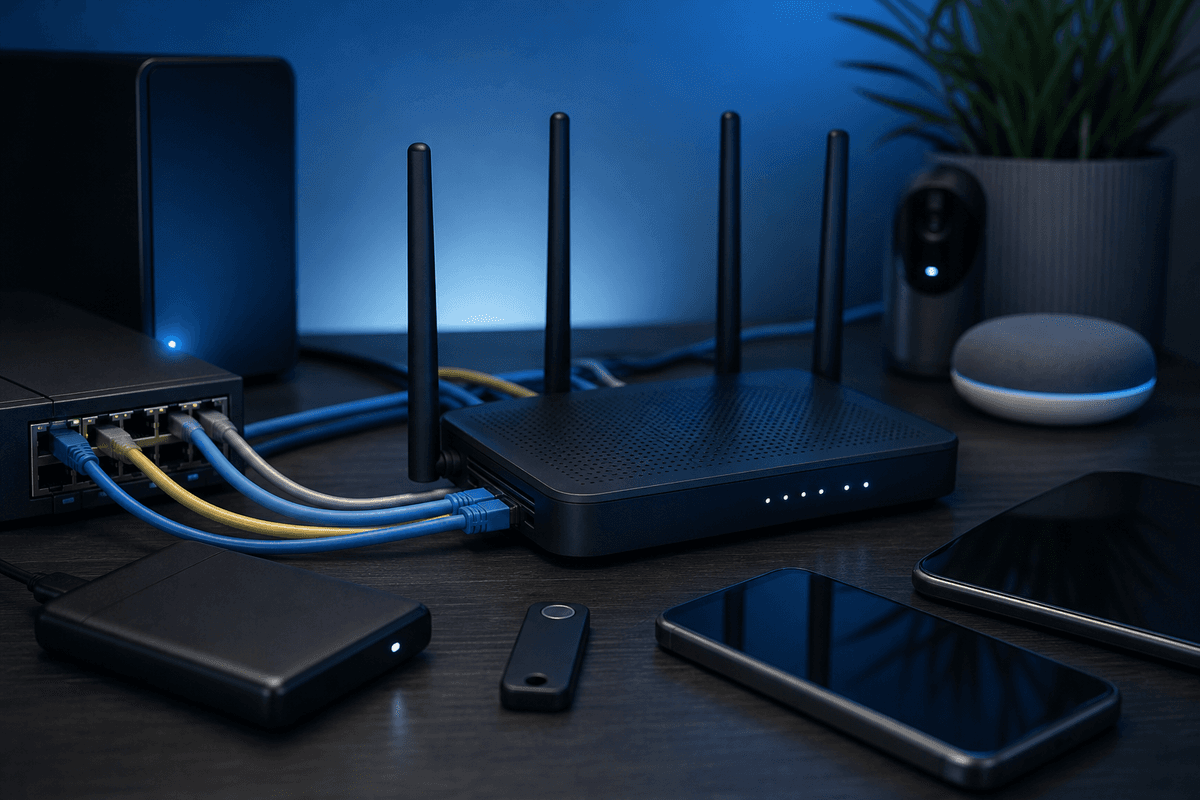
- Networking (20%): TCP/IP protocols and port numbers, network types (LAN, WAN, PAN, MAN, WLAN), wireless networking standards including Wi-Fi 6 and Wi-Fi 6E, network hardware configuration, DNS and DHCP services, and SOHO router configuration with security hardening
- Mobile Devices (15%): Laptop hardware installation and replacement, mobile device connectivity protocols, synchronization methods for iOS and Android, and mobile accessories
- Virtualization and Cloud Computing (11%): Virtual machine concepts, hypervisor types, cloud deployment models including Infrastructure as a Service (IaaS), Platform as a Service (PaaS), and Software as a Service (SaaS), and virtual desktop infrastructure (VDI)
Troubleshooting accounts for 29% of Core 1, the largest single domain. Candidates who build or disassemble actual computers before test day perform significantly better on hardware simulation questions than those who study diagrams alone.
Core 1 vs. Core 2: Exam at a Glance
Passing Score
- Core 1 (220-1101)
- 675 on a 100-900 scale
- Core 2 (220-1102)
- 700 on a 100-900 scale
Time Limit
- Core 1 (220-1101)
- 90 minutes
- Core 2 (220-1102)
- 90 minutes
Max Questions
- Core 1 (220-1101)
- 90 questions
- Core 2 (220-1102)
- 90 questions
Exam Cost
- Core 1 (220-1101)
- $253
- Core 2 (220-1102)
- $253
Primary Focus
- Core 1 (220-1101)
- Hardware and networking fundamentals
- Core 2 (220-1102)
- Operating systems and security
Largest Domain
- Core 1 (220-1101)
- Hardware and Network Troubleshooting (29%)
- Core 2 (220-1102)
- Operating Systems (31%)
| Feature | Core 1 (220-1101) | RecommendedCore 2 (220-1102) |
|---|---|---|
| Passing Score | 675 on a 100-900 scale | 700 on a 100-900 scale |
| Time Limit | 90 minutes | 90 minutes |
| Max Questions | 90 questions | 90 questions |
| Exam Cost | $253 | $253 |
| Primary Focus | Hardware and networking fundamentals | Operating systems and security |
| Largest Domain | Hardware and Network Troubleshooting (29%) | Operating Systems (31%) |
Core 2 Exam (220-1102): Operating Systems and Security
Core 2 builds on technical foundations with emphasis on operating system administration, security implementation, software troubleshooting, and operational procedures. The exam validates skills directly applicable to daily IT support work: user account management, security policy implementation, malware removal, and incident response. The passing score is 700 on a scale of 100-900, 25 points higher than Core 1, with 90 minutes and a maximum of 90 questions.
Core 2 domain breakdown:
- Operating Systems (31%): Windows 10 and Windows 11 installation, configuration, and administration; macOS and Linux basic operations; command-line tools including cmd.exe, PowerShell, and Terminal; disk management and file system types (NTFS, FAT32, ext4); Microsoft 365 features
- Security (25%): Physical security measures (badge readers, locks, cameras), logical security controls (access control lists, principle of least privilege), wireless security protocols (WPA3, WPA2), malware types and prevention, social engineering recognition, browser security settings, secure data destruction, and password management
- Software Troubleshooting (22%): Diagnosing Windows OS problems using Event Viewer and system logs, malware removal procedures, mobile device troubleshooting, application installation and compatibility, and performance optimization
- Operational Procedures (22%): Documentation and ticketing systems, change management, disaster recovery and business continuity planning, safety procedures, privacy regulations including GDPR and CCPA, customer service communication, and basic scripting for automation
The security domain continues growing with each A+ revision, which reflects how often IT support professionals are the first responders to security incidents. Understanding encryption and hashing concepts and following proper data breach response procedures are both tested here and directly applicable to real-world IT roles.
Study Resources That Actually Work
Effective A+ preparation combines structured coursework, hands-on practice, and timed practice exams. According to CompTIA's certification analytics, first-time pass rates average 68% for Core 1 and 72% for Core 2. Candidates who complete structured study programs with hands-on labs achieve pass rates exceeding 85%. Performance-based questions account for 15-20% of exam questions and require demonstrating actual technical tasks, not selecting answers from memory.
Official CompTIA Resources
CompTIA CertMaster Learn is the official interactive eLearning platform with adaptive technology that identifies knowledge gaps. Priced at $329 per exam, it is often bundled with exam vouchers for net cost savings. CompTIA CertMaster Practice provides over 1,000 adaptive practice questions per exam for $99 per exam, automatically surfacing weak areas for focused review.
The most underused free resource is the official CompTIA A+ Exam Objectives PDF, available at no cost from CompTIA.org. Working through this document as a study checklist, rather than treating it as background reading, materially improves exam readiness by ensuring you cover every tested topic before test day.
Third-Party Training
Professor Messer's CompTIA A+ Training Videos are free, complete video courses covering all exam objectives with over 20 hours of instruction per exam. This is the strongest zero-cost option available. Jason Dion's Practice Exams on Udemy closely simulate actual exam question formats, available for $20-$30 per exam with detailed answer explanations that function as teaching material. Mike Meyers' CompTIA A+ Course, available on Udemy and O'Reilly for $20-$200 depending on the platform, is particularly well regarded for hardware demonstration videos that help with component identification and installation tasks.
Building a Home Lab
A home lab environment is the single most important factor in passing performance-based questions. Build one using old computers, virtual machines on VMware Workstation or VirtualBox, or cloud-based lab platforms. Priority skills to practice include installing Windows 10/11 and Linux from ISO images, configuring SOHO routers with WPA3 encryption, using PowerShell and cmd.exe for system tasks, managing user accounts following the principle of least privilege, and performing malware removal using safe mode and system restoration tools.
A+ Study Plan: Step by Step
Download the Official Exam Objectives
Get the free CompTIA A+ Exam Objectives PDF from CompTIA.org. Use it as your master checklist. Every tested topic is listed there, organized by exam domain and performance-based skill.
Complete a Structured Video Course
Work through Professor Messer's free videos or a paid platform like CompTIA CertMaster Learn. Cover one module per session and take notes on unfamiliar concepts before moving to the next topic.
Build Your Home Lab
Set up virtual machines using VirtualBox or VMware. Practice installing Windows 10, Windows 11, and a Linux distribution from ISO. Assemble and disassemble hardware if you have access to spare components.
Take Timed Practice Exams
Use Jason Dion's Udemy practice exams or CompTIA CertMaster Practice. Aim for consistent scores of 80% or higher before scheduling your actual exam. Review every wrong answer with the full explanation.
Drill Performance-Based Questions
Search for free performance-based question simulations online and practice completing tasks under time pressure. These questions cannot be memorized, they must be practiced through repetition.
Schedule and Sit the Exam
Book through Pearson VUE at least one week out. Choose online proctoring if you prefer to test from home. Arrive or log in 15 minutes early with a valid government-issued photo ID.
A+ Exam Preparation Checklist
- Download the official CompTIA A+ Exam Objectives PDF and use it as a topic-by-topic study checklist
- Complete at least one full video course covering all Core 1 and Core 2 domains
- Set up a home lab with VirtualBox or VMware and practice OS installations from ISO
- Install and configure a SOHO wireless router with WPA3 encryption
- Practice PowerShell and cmd.exe commands for user account management and disk operations
- Score 80% or higher consistently on full-length timed practice exams before booking your test date
- Complete at least 10 performance-based simulation exercises under timed conditions
- Confirm your testing method: Pearson VUE testing center or online proctoring
- Verify your government-issued photo ID is current and matches your exam registration name exactly
A+ Security Skills: Foundation for a Cybersecurity Career
The security content in CompTIA A+ goes well beyond basic awareness. Core 2 dedicates 25% of its exam content to physical access controls, logical access management, wireless security protocols, malware identification and removal, data destruction methods, and social engineering defense. These are the daily security responsibilities of IT support professionals at organizations of every size.
According to the FBI's Internet Crime Complaint Center (IC3), reported cybercrime losses exceeded $12.5 billion in recent years, with small and medium businesses representing a disproportionate share of targeted attacks. IT support staff with strong security foundations are often the difference between a threat that succeeds and one that fails, because they recognize suspicious activity before it escalates into a full incident.
Security skills from A+ preparation that apply directly to daily work:
- Malware Remediation: Identifying malware types including viruses, worms, trojans, ransomware, spyware, and rootkits; implementing systematic removal using safe mode, anti-malware tools, and system restoration; preventing reinfection through hardening and software updates
- Access Control Implementation: Configuring user permissions using the principle of least privilege, implementing multi-factor authentication (MFA), managing password policies, and auditing access logs for suspicious activity. Our guide to choosing the best password manager covers tools that align with the credential management skills A+ tests
- Physical Security: Deploying badge readers and biometric authentication, installing cameras in server rooms and equipment areas, using cable locks for laptops and mobile devices, and applying secure disposal procedures for decommissioned equipment
- Social Engineering Defense: Recognizing phishing attempts through suspicious email indicators, identifying voice phishing (vishing) attacks, preventing tailgating, and defending against pretexting and impersonation tactics
- Data Protection: Implementing encryption for data at rest using BitLocker or FileVault, securing data in transit with TLS/SSL protocols, applying secure data disposal methods including degaussing and physical destruction, and maintaining backup and recovery procedures
This security foundation prepares IT professionals for advanced certifications including CompTIA Security+, which builds on A+ knowledge with deeper coverage of vulnerability management and cyber risk. Many cybersecurity analysts and Security Operations Center (SOC) analysts begin with A+ before advancing through Security+, CySA+, and specialized credentials. For professionals who want to work with Endpoint Detection and Response (EDR) and managed detection technologies, A+ provides the technical grounding needed to be effective.
The Takeaway
CompTIA A+ is not just an entry credential. Its security content maps directly to real-world incident response, malware removal, and access control work. Professionals who treat A+ as a security foundation, not just a hiring checkbox, advance faster and qualify for a wider range of roles in IT support, systems administration, and cybersecurity.
Career Paths and Salary Ranges After A+ Certification
A+ opens entry into four primary IT career tracks: help desk technician, desktop support specialist, field service technician, and junior systems administrator. Each offers a different mix of daily responsibilities, compensation, and advancement opportunities, with entry-level salaries ranging from $40,000-$55,000 and experienced professionals in junior admin roles earning $65,000-$75,000.
Remote positions have expanded access significantly, with 38% of IT support roles now offering full or hybrid remote work options according to CompTIA's 2026 IT Industry Outlook. Professionals entering remote IT support roles apply A+ security skills in distributed environments where physical access controls give way to network-based access management and zero-trust principles.
A+ also serves as the first step in several longer career paths:
- Network Administration: A+ then Network+ then CCNA, leading to network security specialist roles
- Cybersecurity: A+ then Security+ then CySA+ or Certified Ethical Hacker (CEH), leading to security analyst or penetration testing roles
- Cloud Computing: A+ then Network+ then Cloud+ or AWS/Azure certifications, leading to cloud administrator or cloud engineer positions
- IT Management: A+ then Project+ then ITIL Foundation, leading to IT manager or project manager roles
According to CompTIA's certification holder survey, 73% of A+ certified professionals pursue additional certifications within three years. Security+ is the most common next step at 42%, followed by Network+ at 31% and vendor-specific credentials from Microsoft, Cisco, or AWS at 27%. Professionals who add Security+ to A+ significantly expand their hiring eligibility, particularly for positions in regulated industries and government roles. Explore Bellator's personal cybersecurity resources to extend the skills A+ builds into broader security practice.
Maintaining Your A+ Certification: CEU Requirements
CompTIA requires earning 20 Continuing Education Units (CEUs) during the three-year certification period to maintain active A+ status. The CE program exists because IT technologies evolve quickly, and skills from three years ago may be outdated or significantly changed by renewal time.
CEU pathways are flexible and fit most learning styles. Earning CompTIA Network+ (50 CEUs) or Security+ (50 CEUs) automatically renews A+ and all lower-level CompTIA certifications. This is the most common renewal method, used by 56% of A+ holders, since it advances your credentials while renewing existing ones at the same time. Other approved pathways include completing CompTIA CertMaster CE courses, attending conferences such as RSA Conference, Black Hat, or DEF CON (up to 10 CEUs per event), and documenting relevant IT employment through CompTIA's CE portal at 5 CEUs per year of verified work.
CompTIA also offers a single-payment CE renewal option with one annual fee of $49-$89 depending on certification level, covering renewals for multiple CompTIA credentials. This is worth evaluating for professionals who hold two or more CompTIA certifications.
The most straightforward renewal path for most A+ holders: earn Security+ within three years. Security+ earns 50 CEUs, well above the 20 required to renew A+, and it automatically renews A+ while adding a substantially higher-value credential to your profile. The combination makes you eligible for a significantly wider range of IT security positions, including DoD 8140 roles at the IAT Level II tier.
Is CompTIA A+ Worth It in 2026?
For anyone targeting an IT support career, the answer is yes. The combination of universal employer recognition, DoD compliance value, a clear path to higher certifications, and a security curriculum that reflects real threats makes A+ the most practical entry credential available. The $506 total exam cost and time investment are modest relative to the salary gains and career doors the credential opens.
A+ is most valuable for four groups: individuals new to IT who need a formal credential to get their first job, career changers moving from unrelated fields into technical support, military or government personnel who need DoD 8140 compliance credentials, and IT support professionals who have been working without formal certifications and want to validate their skills. This CompTIA A+ certification guide is designed to give all four groups a complete picture of what the exams test, how to prepare effectively, and where the credential can take a career.
Strengthen Your Organization's Security Posture
A+ certification builds individual IT competency, but organizations need layered security beyond what any single credential covers. Our experts can evaluate your current security environment and identify gaps before attackers do.
Frequently Asked Questions
CompTIA A+ is the industry-standard entry-level IT certification that validates foundational skills in hardware, networking, operating systems, security, and troubleshooting. It consists of two required exams: Core 1 (220-1101) and Core 2 (220-1102). Over one million IT professionals worldwide hold active A+ certifications, and it is recognized by employers across healthcare, finance, government, and technology sectors.
Each A+ exam costs $253 through Pearson VUE testing centers or online proctoring. The total cost for both required exams is $506. Discounted exam vouchers are sometimes available through CompTIA's academic partners, military programs, or bundled training packages that combine vouchers with study materials.
Most candidates need 3-6 months of dedicated study at 10-15 hours per week. Candidates with prior IT experience may prepare in 4-8 weeks. Hands-on lab practice is the strongest predictor of exam performance, with CompTIA's data showing a meaningful scoring advantage for candidates who log 20 or more hours of practical lab work before their exam date.
Core 1 (220-1101) requires a passing score of 675 on a scale of 100-900. Core 2 (220-1102) requires a passing score of 700 on the same scale. Both exams include a maximum of 90 questions and a 90-minute time limit. Question formats include multiple-choice, multiple-response, drag-and-drop, and performance-based simulations.
Yes. A+ certification is valid for three years from the date you pass your second exam. To maintain active status, you must earn 20 Continuing Education Units (CEUs) during that three-year period through approved training, conferences, work experience, or by passing a higher-level CompTIA certification. Earning Security+ or Network+ (50 CEUs each) automatically renews A+.
A+ qualifies you for help desk technician, desktop support specialist, field service technician, and junior systems administrator positions. Entry-level roles typically pay $40,000-$55,000 annually. Experienced professionals in junior systems administrator roles earn $65,000-$75,000, with major metro areas offering 25-40% above national averages. The certification also meets DoD Directive 8140 requirements, opening pathways into federal government and defense contractor roles.
Core 1 (220-1101) focuses on hardware components, networking fundamentals, mobile devices, and cloud and virtualization concepts, with hardware and network troubleshooting as its largest domain at 29%. Core 2 (220-1102) focuses on operating system administration, security implementation, software troubleshooting, and operational procedures. Core 2 has a slightly higher passing score of 700 compared to Core 1's 675, and its security domain covers 25% of exam content.
A+ is not required for all cybersecurity roles, but it provides the technical foundation that makes advanced security certifications like Security+ and CySA+ more accessible. Most cybersecurity career paths benefit from A+ knowledge because security incidents almost always involve the endpoints, operating systems, and network configurations that A+ covers. The certification also meets DoD 8140 requirements for IAT Level I technical security support roles.
The strongest free resource is Professor Messer's CompTIA A+ Training Videos, which provide complete coverage of both exam objectives with over 20 hours of instruction per exam. For paid options, CompTIA CertMaster Practice ($99 per exam) offers adaptive practice questions, and Jason Dion's Udemy practice exams ($20-$30) closely simulate actual exam formats. Building a home lab using VirtualBox or VMware for hands-on practice is the most important factor in passing performance-based simulation questions.
See whether the service fits
Choose a security approach that fits the way you already work
Start with the outcome and scope. A good fit is clear about who it is for, what is covered, how implementation works, and what happens when the service detects a problem.
People also look for
Keep exploring Phishing & email security
Recognize manipulation, protect email accounts, and give people a clear way to report suspicious messages.
- Common question: what is phishingUnderstand how phishing worksLearn the common phishing types, why they work, and what attackers want.
- Common question: how to spot phishing emailsLearn the warning signs in an emailCheck sender details, urgency, links, attachments, and requests before taking action.
- Common question: email security best practicesUse the email security guideCombine account protection, filtering, safer habits, and reporting procedures.
- Common question: social engineering examplesRecognize social engineering tacticsSee how pretexting, impersonation, urgency, and authority are used to manipulate people.
- Common question: security awareness trainingBuild practical security awarenessHelp employees recognize threats and respond without creating a blame culture.