

Why Your Home WiFi Network Is a High-Value Target
Your home WiFi network is the gateway to every device in your house: your banking app, your work laptop, your children's tablets, and every smart camera, thermostat, and connected speaker. A poorly secured router gives an attacker access to all of it, and often turns your internet connection into a launching point for attacks on others.
Unlike your phone or laptop, routers rarely alert you when security updates are available. Most ship with default admin credentials that attackers know by heart, and they sit in homes for years without anyone reviewing their settings. The Cybersecurity and Infrastructure Security Agency (CISA) and the National Security Agency (NSA) both publish home network security guidance precisely because unsecured routers remain one of the most reliably exploited entry points into household and home-office environments.
This guide gives you a direct, actionable approach to securing your home WiFi network with no specialized technical knowledge required. For a broader picture of your overall personal digital exposure, our personal cybersecurity resource hub covers the full range of threats facing individuals and families in 2026.
Home Network Security: By the Numbers
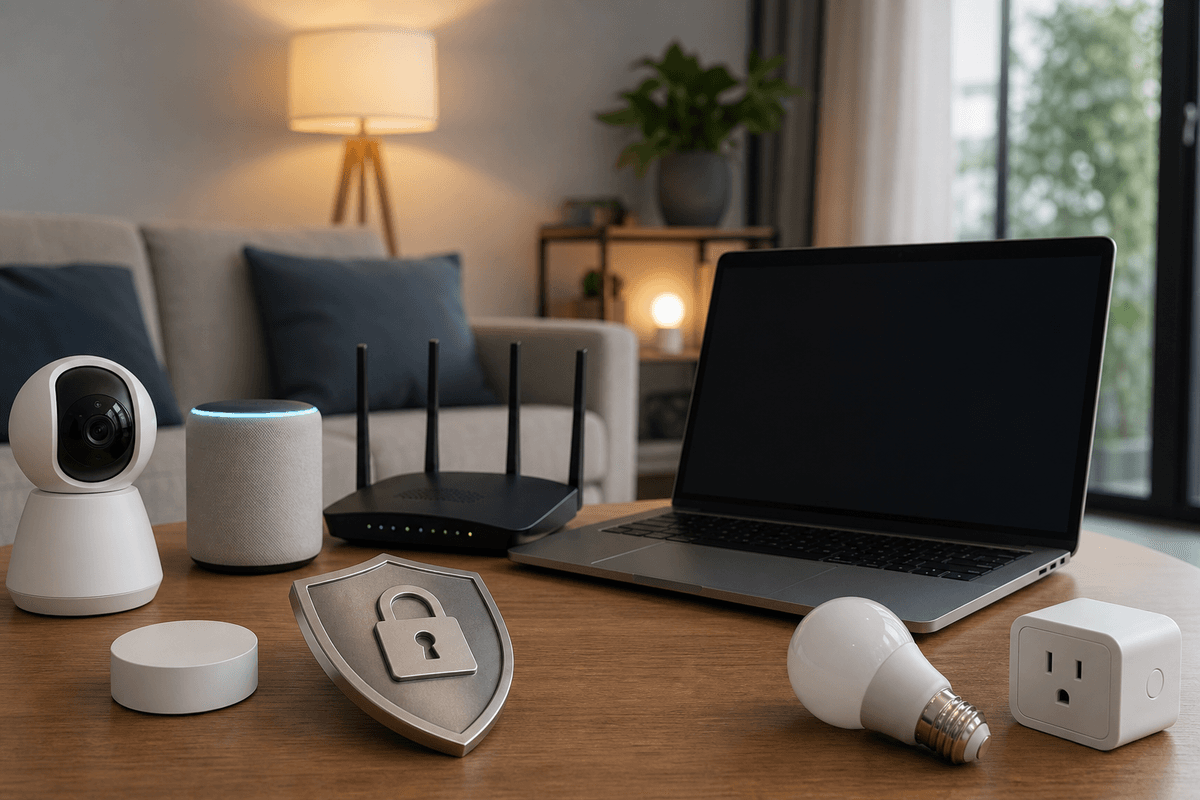
Each device is a potential entry point if your network is unsecured
Fraunhofer FKIE analysis of unpatched firmware across consumer devices
FBI IC3 documents automated tools probing for factory-default router passwords
Understanding Your Home Network's Attack Surface
Your router is the single point of entry for all internet traffic in your home. Attackers target it because it's typically configured once and then forgotten. The most common ways home networks get compromised fall into a handful of well-documented categories.
Default credentials are the most widely exploited weakness. Most routers ship with a predictable admin username and password printed on a sticker or listed in a publicly available manual. The FBI Internet Crime Complaint Center (IC3) has documented that automated scanning tools probe millions of IP addresses daily, testing default credentials on any router with an exposed management port. If yours still uses the factory defaults, discovery by an automated scanner is a matter of when, not if.
Outdated firmware is the second major risk. Router manufacturers issue patches for security vulnerabilities on an ongoing basis, but most consumer devices lack reliable automatic update mechanisms. A 2020 analysis by Fraunhofer FKIE found that 90 percent of tested consumer routers contained known, unpatched vulnerabilities. A router running firmware from two or three years ago may carry dozens of unaddressed flaws rated high severity on the Common Vulnerability Scoring System (CVSS).
Weak WiFi encryption remains a persistent problem. Networks using Wired Equivalent Privacy (WEP) or WPA-TKIP can be cracked in minutes using freely available tools. Even WPA2 is vulnerable to offline dictionary attacks if the passphrase is short or common, and to the KRACK (Key Reinstallation Attack) vulnerability that exploits the WPA2 handshake process.
Additional attack vectors include Universal Plug and Play (UPnP) exploits, which allow malicious software on your network to silently open external firewall ports, and evil twin attacks, where an attacker broadcasts a fake network using your exact network name to intercept credentials. Rainbow table attacks use precomputed password databases to crack networks with common default SSIDs like "NETGEAR" or "Linksys" in seconds.
Understanding these vectors is the foundation for fixing them. For a broader view of your personal digital exposure beyond the router, our guide on protecting your financial accounts online covers account-level protections that complement network hardening.
Eight Essential Steps to Secure Your Home WiFi Network
Change Your Router's Admin Username and Password
Log into your router's admin panel (typically at 192.168.1.1 or 192.168.0.1) and replace the factory default credentials immediately. Use a unique password of at least 16 characters, a passphrase made of four or more unrelated words works well and is far easier to remember than a short string of random characters.
Enable WPA3 Encryption (or WPA2 If WPA3 Is Unavailable)
In your router's wireless settings, set the security protocol to WPA3 Personal. If your router doesn't support WPA3, use WPA2-AES. Never use WEP or WPA-TKIP, both can be cracked in minutes with freely available tools. If your router only supports WEP or WPA-TKIP, it's time to replace it.
Set a Strong, Unique WiFi Network Passphrase
Your WiFi passphrase should be at least 12 characters and avoid dictionary words or predictable patterns. A sequence of four or more random words (often called a passphrase) is both secure and easier to type on a phone keyboard than a short string of symbols.
Change Your Network Name (SSID)
Rename your WiFi network from the factory default (which typically includes the router brand or ISP name). Default SSIDs let attackers quickly identify router models and target known vulnerabilities. Don't include your name, address, or apartment number in the SSID.
Update Your Router's Firmware
Log into your router's admin panel and check for firmware updates under the maintenance or administration section. If automatic updates are available, enable them and verify they're working. Repeat this check monthly, manufacturers push patches for newly discovered vulnerabilities throughout the year.
Disable Remote Management and Unused Features
Turn off remote management unless you specifically need it, and disable Universal Plug and Play (UPnP) unless a device on your network requires it. UPnP allows software to automatically open ports in your firewall, which malware can exploit. Also disable WPS (WiFi Protected Setup), its PIN authentication mode has known vulnerabilities.
Create a Separate Guest Network for Visitors and IoT Devices
Set up a second network (most modern routers support this under the guest network or SSID settings) for visitors, smart TVs, cameras, thermostats, and other Internet of Things (IoT) devices. This network isolation means a compromised smart device cannot reach your computers or phones.
Enable Your Router's Built-In Firewall
Confirm that your router's Stateful Packet Inspection (SPI) firewall is turned on. Most modern routers enable this by default, but verify it under the security or firewall section of your admin panel. Some routers also offer DoS (denial-of-service) protection settings, enable those as well.
Advanced Hardening: Beyond the Essential Steps
Once the foundational steps are in place, these techniques provide meaningful additional protection, especially for home offices handling sensitive client or business data, or households with a large number of connected devices.
Segment Your Network by Device Type
Beyond a basic guest network, consider three distinct segments: one for computers and phones handling sensitive data, one for IoT and smart home devices, and one for visitors. The NSA's cybersecurity guidance for home users specifically recommends isolating device categories to contain the impact of any single compromise. Many mid-range routers from ASUS, Netgear Orbi, and Eero Pro support multiple SSIDs or VLAN configuration without requiring enterprise-grade hardware.
Enable MAC Address Filtering
Media Access Control (MAC) filtering restricts network access to pre-approved devices only. While not foolproof because MAC addresses can be spoofed with basic tools, it adds a meaningful barrier against casual attackers. This works best in households with a stable set of devices that rarely changes.
Audit Connected Devices on a Schedule
Log into your router's admin panel quarterly and review the complete list of connected devices. Any device you don't recognize should be investigated before assuming it's benign. The free tool Fing scans your network and identifies every connected device by manufacturer, hostname, and IP address with more detail than most built-in router interfaces provide.
Enable Router Event Logging
Most modern routers support traffic or event logging. Reviewing logs quarterly surfaces unexpected outbound connections, repeated failed login attempts, or devices communicating with unusual IP ranges. These patterns often precede or accompany a network compromise. Most home users never review router logs; doing so quarterly puts you well ahead of the average household security posture.
Be Selective About VPN Use at Home
A Virtual Private Network (VPN) encrypts traffic between your device and the VPN server. VPNs are essential on public WiFi, but running one on an already-encrypted WPA3 home network delivers limited additional protection for typical household use. The meaningful exception: a home office that needs to connect to a corporate network should use the employer-provided VPN. If you're evaluating personal VPN services, our guide on how to choose a VPN covers what actually matters in a provider beyond marketing claims.
Home WiFi Security Checklist
- Changed router admin username and password from factory defaults
- Enabled WPA3 encryption (or WPA2-AES if WPA3 unavailable)
- Set a WiFi passphrase of at least 12 characters with no dictionary words
- Renamed your SSID away from the router brand or ISP name
- Checked for and installed the latest router firmware update
- Disabled remote management, UPnP, and WPS
- Created a separate guest or IoT network for smart devices and visitors
- Verified the router's built-in SPI firewall is enabled
- Reviewed connected device list for any unrecognized entries
- Scheduled a quarterly reminder to check firmware and review device list
Smart Home Devices Deserve Their Own Security Strategy
The average U.S. household now connects more than 25 devices to its home network. Smart TVs, security cameras, voice assistants, thermostats, and connected appliances each represent a potential entry point, and most ship with minimal built-in security that users never review after setup.
Placing every IoT device on an isolated network segment is the single most effective step you can take to contain the impact of a compromised device. Beyond network isolation, apply the same credential hygiene to smart devices as to your router: change default usernames and passwords on every camera and smart hub, and disable features you don't use. Many cameras ship with Telnet or FTP access enabled by default that serves no household purpose.
Register your devices with the manufacturer so you receive security advisory emails when patches are released. When a firmware update is available for your camera, thermostat, or router, installing it within a week dramatically reduces your exposure window.
The FBI's Internet Crime Complaint Center has documented cases where compromised home cameras were used for unauthorized surveillance and where compromised routers were recruited into botnets conducting large-scale attacks on unrelated targets. Our coverage of federal IoT botnet dismantlement operations illustrates exactly how these networks are assembled and which devices attackers target first.
For households with children, pairing network controls with DNS-level content filtering protects them from unsafe content as well as security risks. Services like Cloudflare for Families (1.1.1.3) operate at the network level without requiring software on each device: configure it once in your router's DNS settings. For detailed guidance on securing the devices your family carries everywhere, our guide on personal cybersecurity for individuals and families covers mobile device hardening that complements network-level controls.
If you work from home and handle sensitive client data, the threat model extends further. Attackers who compromise a home router can intercept unencrypted traffic, redirect DNS queries to phishing pages, or pivot to corporate VPN sessions. Our guide on remote work security for small teams covers the additional controls home-office users should layer on top of these network fundamentals.
Bottom Line
Securing your home WiFi network comes down to a handful of concrete actions: replace default credentials, enable WPA3 encryption, update firmware regularly, and isolate smart home devices on a separate network segment. These steps address the attack vectors that automated scanning tools exploit at scale every day. None require technical expertise, and most take under 15 minutes to complete.
How to Choose a More Secure Router
If your current router is more than five years old, runs firmware the manufacturer no longer updates, or doesn't support WPA3, replacing it is a more effective investment than trying to harden aging hardware. When evaluating a new router, look for these specific capabilities.
WPA3 support is the baseline. Most routers released after 2020 include it, but verify before purchasing. Automatic firmware update support matters almost as much: a router that patches itself silently is far safer in practice than one that requires you to remember to check manually. Look for manufacturers with a clear public policy on how long they support a product with security patches. TP-Link, ASUS, Netgear, and Eero each publish support timelines and security advisories.
For households with many IoT devices, a router that supports multiple SSIDs or VLANs lets you implement network segmentation without buying additional hardware. Mesh systems from Eero Pro and Google Nest WiFi Pro support multiple network segments via their companion apps, making segmentation accessible without logging into a command-line interface.
DNS-over-HTTPS (DoH) support in the router itself encrypts your DNS queries before they leave your home, preventing your ISP or an attacker from reading which domains you look up. This is a newer feature available on higher-end consumer routers and is worth enabling if your hardware supports it.
Avoid routers from manufacturers with a poor track record of patching disclosed vulnerabilities promptly. The vulnerability disclosure histories of major router brands are publicly searchable in the NIST National Vulnerability Database (NVD), which is a useful reference when comparing models before you buy.
Routers on End-of-Life Firmware Are Not Patchable
When a router manufacturer ends firmware support for a model, no further security patches are issued, even for newly discovered vulnerabilities rated high or critical severity. Check your router model against the manufacturer's support page. If support has ended, replacing the device is the only way to close newly discovered security gaps. Running an unsupported router is equivalent to running a PC on an operating system that no longer receives security updates.
What This Means for Your Household
Attackers rarely target specific individuals when they scan for vulnerable home routers. They use automated tools that test millions of IP addresses for default credentials, open management ports, and outdated firmware. Your defenses don't need to be perfect: they need to be better than the average unprotected household, which is a low bar to clear with the steps above.
Compromised home routers have been used to conduct credential-stuffing attacks against financial institutions, to host phishing pages, and to relay traffic for ransomware operators while the household owner remains completely unaware. Understanding how phishing attacks work helps you recognize attempts that bypass network controls entirely by targeting your accounts directly. And if the worst happens, knowing what to do after a data breach can limit the downstream damage.
For households managing passwords across dozens of devices and accounts, our comparison of the best password managers for personal use is a practical next step once your network is hardened. Strong, unique passwords for every device and account close the gaps that network-level controls can't address.
Learning how to secure your home WiFi network is one of the highest-return security actions any household can take, because a single compromised router exposes every device behind it simultaneously. Paired with strong credential practices and awareness of phishing tactics, it forms the foundation of a household security posture that holds up against the automated threats active in 2026.
Ongoing Maintenance: Keeping Your Home Network Secure Over Time
Knowing how to secure your home WiFi network is only useful if you keep the security current. New vulnerabilities are discovered in router firmware throughout the year, your network changes as you add devices, and threat actors continuously update their tools. A simple recurring routine keeps your defenses current without demanding significant time.
Monthly: Check for firmware updates in your router admin panel. Major manufacturers like ASUS, Netgear, TP-Link, and Eero push patches for newly discovered vulnerabilities regularly. Most modern routers offer automatic updates, but verify the setting is active and that updates are actually being applied. This check takes about two minutes.
Every three months: Review the connected device list and remove anything you don't recognize. Change your WiFi passphrase if you've shared it widely or suspect it has circulated beyond intended recipients. A sequence of four or more unrelated random words makes an excellent passphrase: resistant to cracking and far easier to type on a phone keyboard than a short string of special characters. For guidance on creating and managing strong credentials across all your accounts, our guide on how to create strong passwords covers the principles that apply equally to router admin panels and online accounts.
When replacing a router: Perform a factory reset before donating or reselling your old unit, and verify the reset fully cleared your configuration data. Routers in service for more than five years should be evaluated for replacement, particularly if the manufacturer has ended firmware support. An unsupported router will never receive patches for future vulnerabilities, and no amount of configuration changes can compensate for that gap.
For threat categories that reach beyond your router, including phishing attacks that bypass network controls entirely, social engineering used to steal credentials, and how encryption protects data in transit, our personal cybersecurity resource center covers each in detail. For context on how encryption works at the technical level, our explainer on hashing vs. encryption clarifies the distinctions that matter when evaluating security tools and services.
Get Your Free Personal Security Review
Our experts will evaluate your current home network setup and personal cybersecurity posture, then provide specific, actionable recommendations at no cost.
Frequently Asked Questions
Changing your router's default admin credentials is the single most effective first step. Automated scanning tools probe millions of IP addresses daily using known factory-default usernames and passwords. If you only do one thing, replace those defaults immediately. Enabling WPA3 encryption and updating firmware are the next two highest-impact actions.
Use WPA3 Personal if your router supports it. WPA3 provides stronger encryption than WPA2 and is resistant to offline dictionary attacks that affect WPA2 networks with weak passphrases. If your router doesn't support WPA3, use WPA2 with AES encryption (sometimes listed as WPA2-AES or WPA2-CCMP). Never use WEP or WPA-TKIP, both of which can be cracked in minutes with freely available tools.
Check for firmware updates monthly. Most modern routers from manufacturers like ASUS, Netgear, TP-Link, and Eero support automatic updates, but verify that the setting is enabled and that updates are actually being installed. If your router no longer receives firmware updates from the manufacturer, consider replacing it, because unsupported hardware will never receive patches for future vulnerabilities.
Hiding your SSID provides minimal real security. Attackers use passive scanning tools that detect hidden networks just as easily as visible ones. A more effective approach is to rename your SSID away from the factory default (which often reveals the router brand and model), set a strong WPA3 passphrase, and ensure your router firmware is current. SSID hiding can also cause connectivity issues for legitimate devices.
Place smart TVs, security cameras, voice assistants, smart thermostats, connected appliances, game consoles, and any visitor devices on your guest or IoT network. Keep computers and phones that handle banking, email, or work data on your primary network. This segmentation means a compromised smart device cannot reach or scan your sensitive devices, containing the damage if any IoT device is exploited.
A VPN is essential on public WiFi, but its security benefit on a properly secured home network is limited. Your home network traffic is already encrypted by WPA3 or WPA2-AES between your devices and the router. Where a VPN adds clear value at home: connecting to a corporate network from a home office (use the employer-provided VPN), or if your ISP's DNS practices concern you. Our guide on how to choose a VPN covers what to evaluate beyond marketing claims.
Log into your router's admin panel and look for a section labeled "Connected Devices," "Device List," or "DHCP Clients." Most routers display each device's IP address, MAC address, and hostname. For a more detailed view, the free tool Fing (available for iOS and Android) scans your network and identifies devices by manufacturer, model, and hostname. Review this list quarterly and investigate any device you don't recognize.
Perform a factory reset on the router immediately, which clears all configuration data including any settings an attacker may have modified. Then reconfigure it from scratch using the steps in this guide: new admin credentials, WPA3 encryption, a new SSID, updated firmware, and disabled UPnP and remote management. Change the passwords on any accounts you accessed through the compromised network. If you handle sensitive work data, notify your employer's IT or security team. Our guide on what to do after a data breach covers additional steps for limiting downstream damage.
WPA2 with AES encryption is still considered adequate for most home networks when paired with a strong passphrase (12 or more characters, no dictionary words). WPA3 offers meaningful improvements, including protection against offline password-cracking attacks and forward secrecy, but a WPA2 network with a strong passphrase and current firmware is significantly more secure than the average home network. If your router only supports WEP or WPA-TKIP, replace it regardless of other settings.
The eight essential steps in this guide take most households 30 to 45 minutes to complete from start to finish. The largest time investment is locating your router's admin panel and navigating its interface for the first time. Changing default credentials takes about two minutes. Updating firmware typically takes 5 to 10 minutes including the reboot. Setting up a guest or IoT network adds another 5 to 10 minutes depending on your router's interface. After the initial setup, ongoing maintenance takes about five minutes per month.
Start with the concern that matters most
Make your accounts, devices, or family safer one clear step at a time
You do not need to change everything today. Choose the account, device, scam, or family concern that brought you here and fix the highest-impact opening first.
People also look for
Keep exploring Passwords & account security
Make passwords, password managers, MFA, and passkeys work together to reduce account takeover risk.
- Common question: password security best practicesApply current password best practicesUse long unique passwords, password managers, MFA, and passkeys where they make sense.
- Common question: NIST password manager guidanceRead the NIST password manager guidanceUnderstand how official guidance treats password managers and modern authentication.
- Common question: best password manager for personal useChoose a personal password managerCompare the practical features that make a password manager safer and easier to keep using.
- Common question: how to create a strong passwordCreate stronger, unique passwordsReplace short, reused passwords with a system that is both stronger and manageable.
- Common question: password security guideStart with the password security guideBuild a complete account-protection routine for work or home.