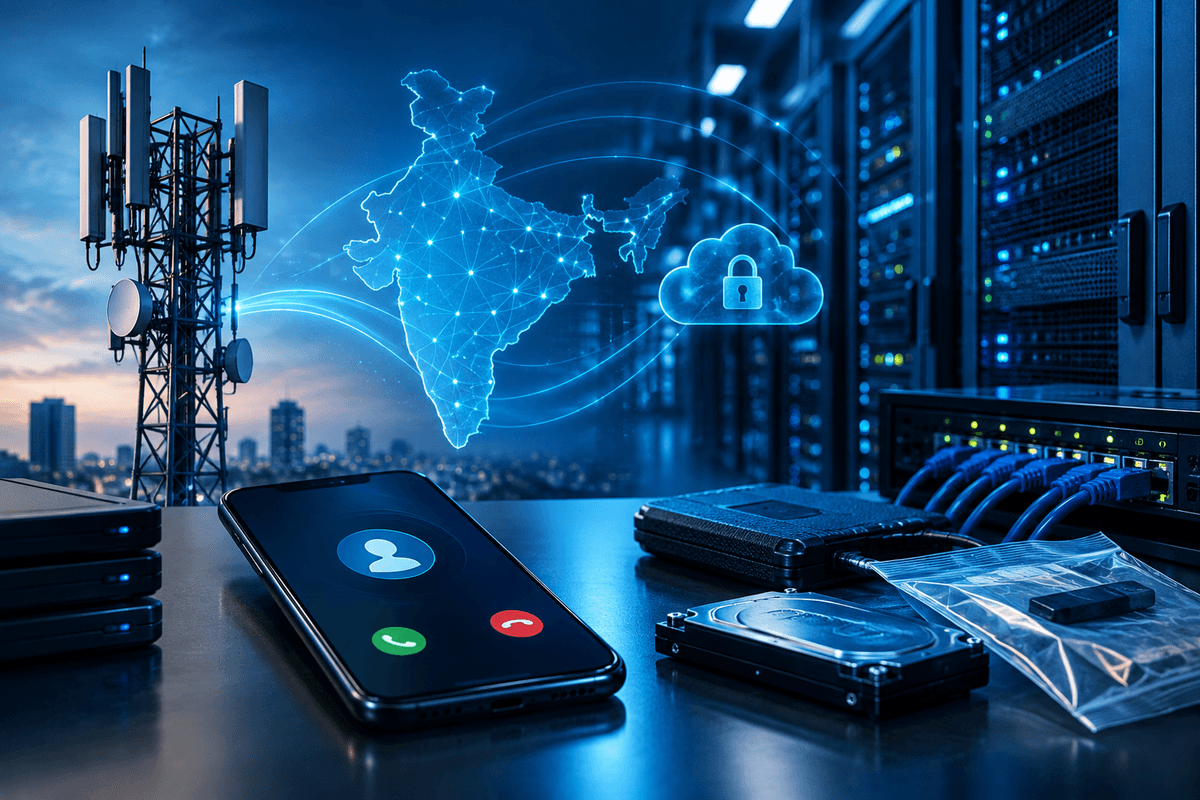
India has directed telecom service providers to display a caller's registered name alongside the number on incoming calls over 4G and newer networks beginning November 1, 2026. The stated goal is to help people identify unknown callers and reduce exposure to spam and fraudulent-call tactics, according to the supplied news report about a Department of Telecommunications circular.
For businesses and consumers, the change could make an incoming call easier to assess before it is answered. It should not, however, be treated as proof that the caller is legitimate, authorized, or safe to trust. A displayed name is an identity signal tied to telecom registration records, not a verification of the caller's present intent, the request they make, or the security of any follow-up message or payment instruction.
India's rule adds a new caller identity signal
The Department of Telecommunications is India's government body responsible for telecommunications policy and oversight. The supplied report says its circular urges telecom service providers, or TSPs, to show registered caller names with incoming numbers on 4G and newer networks from November 1, 2026.
According to the supplied news item, the requirement applies to 4G and newer mobile networks and takes effect on November 1, 2026. The report does not provide implementation details such as how names will be presented, how quickly records will update, whether every category of number is covered, or what exceptions may apply. Those details matter because caller identity systems are only as useful as their enrollment, data-quality, and correction processes.
The immediate benefit is practical: a recipient who sees an unfamiliar number paired with a recognizable registered name may have more context before answering. That is especially relevant for appointments, delivery coordination, banks, accountants, clinics, vendors, and family members who regularly receive calls from numbers not saved in their contacts.
Key Takeaway
A registered caller name can improve screening, but it is not authentication. Do not disclose passwords, one-time codes, health information, tax records, banking details, or remote-access permissions solely because a name appears on an incoming call.
Caller-name display can reduce uncertainty, not eliminate impersonation risk
Bellator Cyber Guard's analysis is that this policy can improve the first few seconds of a phone interaction, when people decide whether to answer, ignore, or return a call. That is meaningful, but it addresses only one part of phone-based social engineering. Attackers often rely on urgency, authority, familiar brands, and requests to move a conversation to a different channel. Those tactics can still work after a recipient sees a name they recognize or assumes a displayed name has been independently verified.
Organizations should also expect a transition period. Customers and staff may misunderstand the feature and assume every displayed name is a verified business identity. Companies that use multiple lines, call centers, outsourced support, or staff mobile phones should review how their public-facing calling identities are registered and how customers are told to validate sensitive requests.
A healthcare practice has an added reason to be careful. Staff may receive calls about appointments, records, billing, prescriptions, or insurance. Caller display can help triage an unknown call, but it should not replace established identity-verification procedures before staff discuss protected information or change contact details. The same applies to tax firms receiving calls about client documents, filing questions, account access, or payment instructions.
Small businesses should view the change as an opportunity to reduce confusion in legitimate customer outreach. If customers regularly see calls from several different business lines or third-party service providers, publish a simple, current list of official contact channels. That list should explain that customers can independently call back using the number on the company's website, statement, or known account portal when a request concerns money, credentials, or personal data.
What businesses should review before November 1
First, inventory every number your organization uses for customer, vendor, and employee communications. Include reception lines, cloud phone systems, mobile devices, contact centers, payment teams, after-hours services, and outsourced providers. For each number, identify the registered account holder and the name that customers are likely to see.
Second, establish an ownership and correction process. A stale or confusing registered name can create support problems and make legitimate outreach look suspicious. Assign responsibility for maintaining carrier account information, retain supporting documentation, and define who approves changes when a business is renamed, acquired, relocated, or reorganized.
Third, update call-handling scripts. Employees should never use caller-name display as the sole basis for approving a password reset, account change, wire request, tax-document release, or health-information discussion. Require an independent verification step that fits the risk, such as calling a known number on file, using a customer portal, or following a documented callback process.
Fourth, tell customers what to expect. A concise notice can state the official names and numbers from which the organization may call, while emphasizing that staff will not request passwords or one-time codes over an unsolicited call. Clear expectations reduce both fraud risk and unnecessary suspicion of legitimate staff.
Consumers should use the name as a prompt to verify
For consumers, the safest response to an unexpected call about an account, payment, tax matter, delivery problem, medical issue, or device security is to pause before acting. A name that matches a known organization can be useful context, but the safer next step is to end the call and contact that organization through a number from its official website, app, card, bill, or prior correspondence.
Do not share one-time passwords, PINs, recovery codes, account credentials, or remote-control access in response to an unsolicited call. These requests remain high-risk regardless of what appears on the screen. If a caller claims an urgent deadline, independently verify it before sending money, downloading software, or opening a link sent during the call.
India's November 2026 caller-name display requirement is a helpful telecom-layer improvement because it gives recipients more context at the point of contact. Its value will be highest when users and organizations treat it as one signal within a wider verification process: recognize the name, confirm the request through a trusted channel, and keep sensitive actions behind documented access controls.
Learn first. Decide when you are ready.
Keep learning, or apply this to your situation
Continue with a related guide, compare your options, or ask a specialist to help turn the advice into a practical next step.
People also look for
Keep exploring Security basics
Start with the fundamentals, understand the most likely risks, and choose the next improvement without getting lost in jargon.
- Common question: cybersecurity basicsBuild better cyber hygieneCover the everyday habits and controls that prevent a large share of common incidents.
- Common question: why do hackers target small businessesUnderstand why smaller organizations get targetedSee how opportunity, automation, access, and recovery pressure shape attacker decisions.
- Common question: small business cyber risk assessmentStart with a cyber risk assessmentIdentify important assets, likely threats, current safeguards, and the most useful next steps.
- Common question: cybersecurity solutions for small businessCompare business security optionsFind the right starting point by audience, threat, or compliance need.
- Common question: how hackers choose targetsLearn how attackers choose targetsUnderstand what makes an organization or person visible and attractive to automated attacks.