
Bellator Cyber Guard
Tax Cybersecurity Resources
Cybersecurity, compliance, and incident-response resources for tax professionals and accounting firms.

WISP Template for Sole Proprietors: Complete 2026 Guide
Build a compliant WISP for your sole proprietor tax practice: FTC Safeguards Rule basics, IRS Publication 4557 requirements, and a 6-step setup process.

Is Uploading Tax Documents Safe and Encrypted?
Is uploading tax documents safe and encrypted? Learn what TLS and AES-256 actually protect, how to check a portal, and what the IRS and FTC require in 2026.

FTC Safeguards Rule: Tax Preparers & Financial Institutions
The FTC Safeguards Rule treats tax preparers as financial institutions under GLBA. See the 9 required controls, 2026 compliance steps, and penalties.
IRS Form 4557 Requirements: Safeguarding Taxpayer Data
Form 4557 requires a written WISP, MFA, and encryption for every paid tax preparer. See the requirements and what happens if you skip them.

FTC Safeguards Rule for Tax Preparers: 2026 Compliance Guide
The FTC Safeguards Rule applies to tax preparers and allows fines up to $50,120 per violation. See the 9 required safeguards and 2026 compliance steps.

IRS Security Six Checklist for Tax Professionals (2026)
The IRS Security Six requirements cover antivirus, firewalls, MFA, backups, encryption, and VPNs. See what tax professionals need in place for 2026.

Tax Document Encryption Requirements: What the IRS Expects
GLBA and IRS Publication 4557 require TLS 1.2+ encryption on every tax document transmission, including scan-to-email. See the 2026 compliance checklist.

IRS Publication 5293: Your Data Security Resource Guide
IRS Publication 5293 compiles data security resources for tax preparers. See what's inside, how it connects to your WISP, and what to do in 2026.
How to Encrypt Client Tax Data: IRS Requirements Guide
Tax data management requires AES-256 encryption under IRS Publication 4557 and the FTC Safeguards Rule. BitLocker, FileVault, and WISP documentation steps.
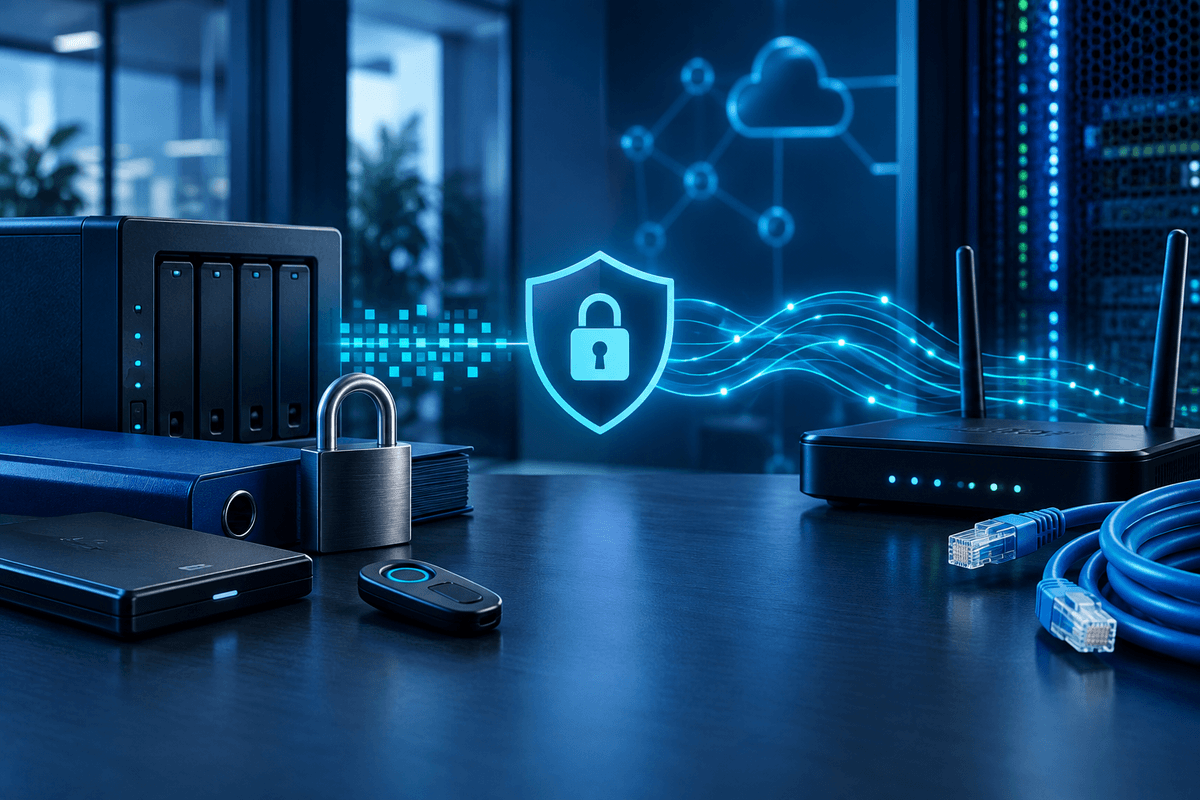
Encryption at Rest vs. in Transit: What's the Difference?
Encryption at rest protects stored data; encryption in transit protects data moving across networks. See the difference and why 2026 compliance rules require both.
Accounting Firm WISP Template Examples & Guide 2026
The IRS's free WISP template is a starting point, not a compliant plan. See what it covers, what's missing, and the required sections for 2026.
WISP for Small Tax Firms: Simplified Compliance Guide
Every tax preparer with a PTIN needs a WISP. See what the FTC Safeguards Rule and IRS Publication 4557 require for 2026, including mandatory MFA.
Small Business Vendor Risk Management Guide
How to build a small business vendor risk management program, covering risk tiers, vendor questionnaires, contract clauses, and compliance requirements.

Two-Factor Authentication for Tax Software: Setup Guide
Compare 2FA enforcement across Drake, Lacerte, CCH Axcess, and Thomson Reuters, plus the vendor checklist IRS Publication 4557 requires in 2026.

Cybersecurity for Tax Professionals 2025: Complete IRS Compliance Guide
Cybersecurity for tax professionals in 2026: IRS Publication 4557, the FTC Safeguards Rule, WISP requirements, and the Security Six controls explained.

IRS Publication 4557: What Every Tax Professional Must Know in 2026
IRS Publication 4557 requires the Security Six controls and a WISP for every paid tax preparer. Here's what it means for your practice and how to comply.

FTC Safeguards Rule Vendor Oversight for Tax Firms
Learn FTC Safeguards Rule service provider oversight requirements for tax preparers and build a practical vendor review process. Review your gaps.
Why Hackers Target Tax Preparers and How to Fight Back
Tax professionals are frequent spear-phishing targets because they hold high-value taxpayer data. Learn the practical controls tax firms should use to reduce risk.

Cybersecurity Checklist for Enrolled Agents 2026
Follow this 2026 cybersecurity checklist for enrolled agents to satisfy IRS Publication 4557, FTC Safeguards, and WISP requirements. Get a free assessment today.

IRS Form 14039-B: Data Theft Reporting for Preparers
Learn what IRS Form 14039-B covers, how it differs from a data breach report, and the exact steps tax preparers must take after client data theft.

Business Email Compromise Prevention for Tax Firms
Learn how tax firms stop business email compromise with SPF/DKIM/DMARC, MFA, and verification rules. Practical steps you can start this week.

Secure Data Destruction Requirements for Tax Preparers
What the FTC Safeguards Rule, FACTA Disposal Rule, and IRS Publication 4557 require for destroying client tax data securely. Get the checklist.

Cybersecurity Training for Seasonal Tax Preparers in 2026
Cybersecurity training for seasonal tax preparers should cover phishing, data handling, and your WISP. See what to include and how to roll it out.

WISP Documentation Retention Period for Tax Preparers
How long must tax preparers keep WISP documentation? No fixed federal number exists; here's what FTC and IRS rules require and a practical retention plan.

IRS Tax Pro Account MFA Setup: A 2026 Step-by-Step Guide
Learn how to set up multi-factor authentication on your IRS Tax Pro Account in 2026, from ID.me verification to backup codes, in this step-by-step guide.

FTC Safeguards Rule Qualified Individual Requirement
The FTC Safeguards Rule requires every covered business to name a Qualified Individual over its security program. Here's who qualifies and what they must do in 2026.

CPA WISP Requirements for 2026: What the IRS Actually Checks
WISP requirements for CPAs and tax preparers in 2026: the nine FTC Safeguards Rule elements, the IRS Publication 5708 updates, and what reviewers check.
Is Tax Preparation Software Secure for Personal Information in 2026?
Is tax prep software secure for personal information? See what IRS Publication 4557 and the FTC Safeguards Rule require, plus a 2026 filer checklist.

VPN for Tax Professionals: Secure Remote Access Guide
Set up a compliant VPN for your tax practice: IRS Security Six requirements, AES-256 encryption, MFA enforcement, and audit-ready log retention explained.
Best Cloud Services for Tax Professionals
The best cloud hosting for tax professionals meets IRS Pub 1075 and FTC Safeguards Rule standards: SOC 2, MFA, AES-256 encryption, and US-only data residency.

MITRE ATT&CK Framework: A Practical Guide
MITRE ATT&CK maps 14 attacker tactics and 270+ techniques. See what it covers, how small businesses find coverage gaps, and where managed EDR fits.

Cyber Liability Insurance for CPA Firms: 2026 Guide
Cyber liability insurance for CPA firms covers breach costs that E&O and CGL policies exclude. See what it costs, what it covers, and how to qualify in 2026.

Cybersecurity Risk Assessment Template & Methodology Guide
A NIST-aligned cybersecurity risk assessment template and 7-step methodology to identify threats, score risk, and document findings for compliance.

Secure Email for Tax Professionals: Client Communication Guide
Learn how to secure client email communications as a tax professional. IRS Publication 4557 requirements, encrypted email options, and WISP documentation explained.
Tax Season Cybersecurity Preparation for CPA Firms
CPA firms face peak cyberattacks during tax season. This preparation guide covers IRS compliance, WISP requirements, MFA enforcement, and phishing defense for tax professionals.
Multi-Location Tax Office Centralized Security Management
Learn how multi-location tax offices centralize security management to meet IRS Publication 4557 and FTC Safeguards Rule requirements at every branch.