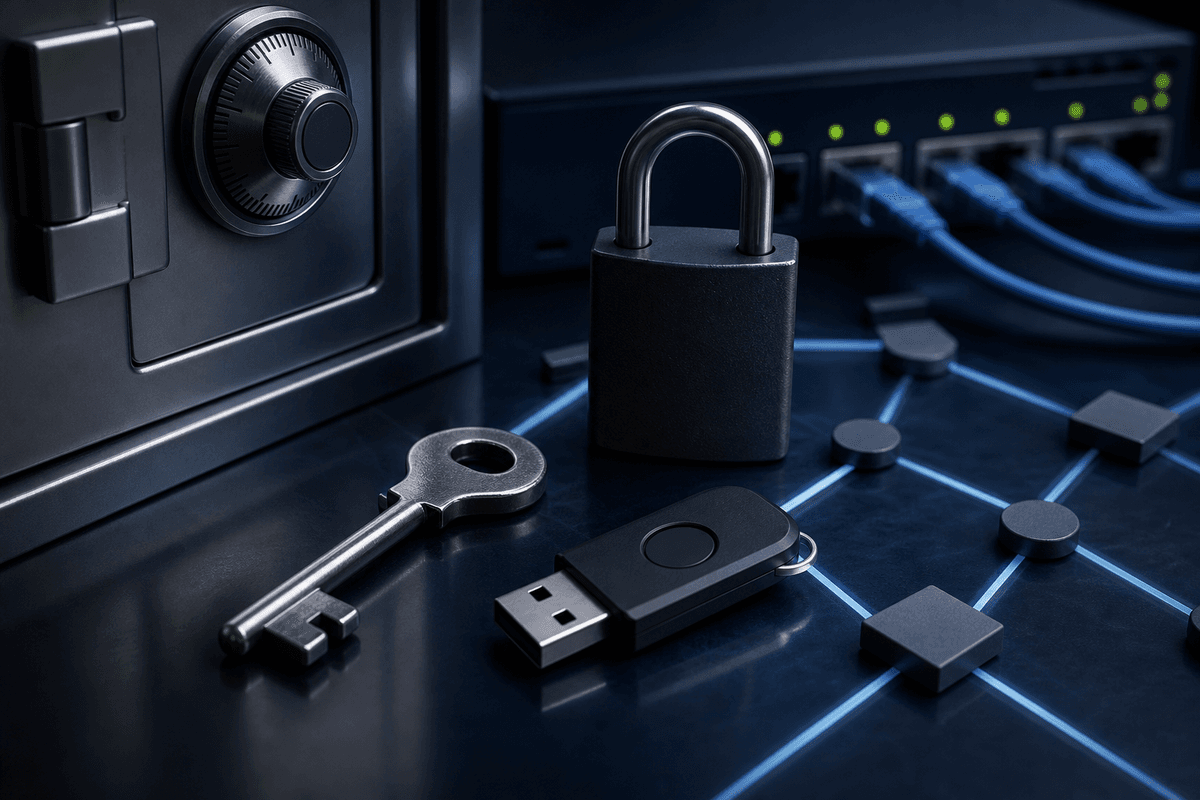
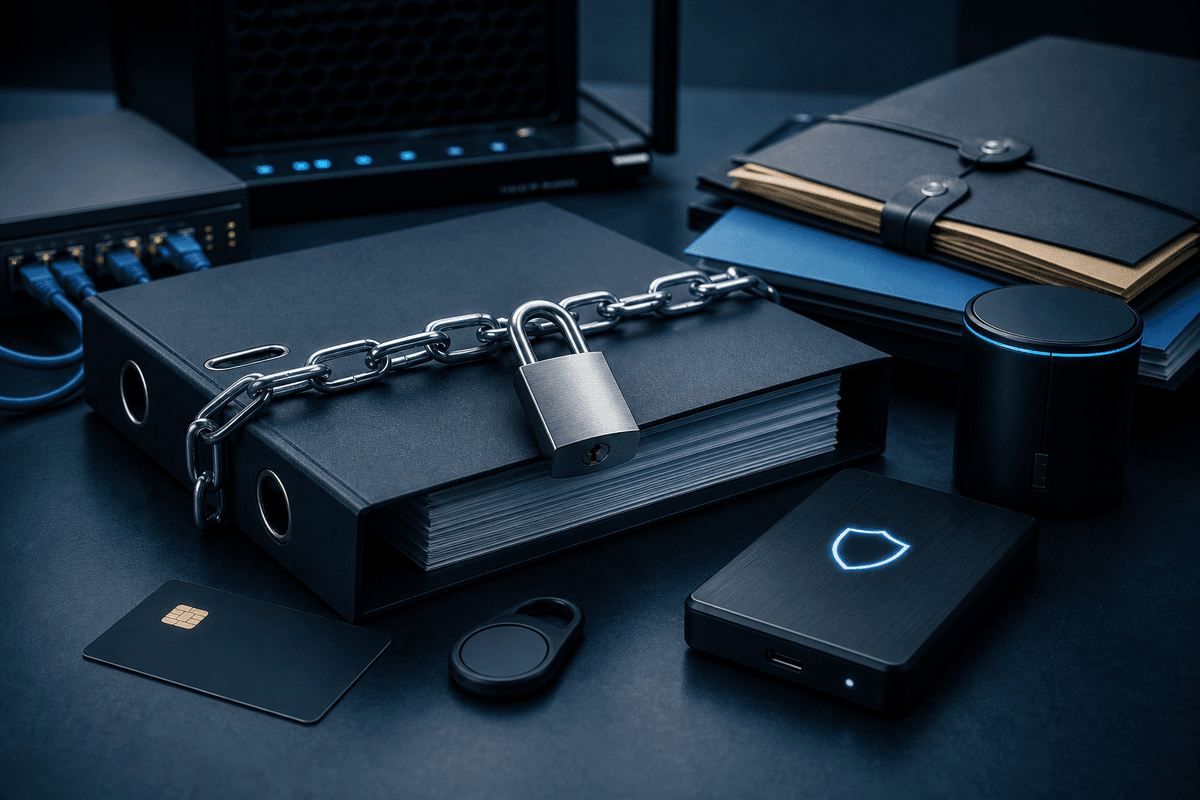
A defense in depth cybersecurity strategy reduces the chance that one failed control becomes a business-wide incident. Instead of relying only on a firewall, antivirus tool, or employee training, it combines overlapping safeguards across people, identity, devices, networks, applications, data, and recovery operations. Each layer should slow an attacker, limit what they can access, detect suspicious activity, or help your organization recover.
This approach remains practical for small and midsize organizations in 2026 because many attacks do not depend on defeating every control. The 2025 Verizon Data Breach Investigations Report reported ransomware in 44% of breaches reviewed. A layered program helps contain the operational effects of threats such as credential phishing, unpatched internet-facing systems, and ransomware after an initial foothold.
Quick Answer
Defense in depth is a security design method that uses multiple, independent safeguards rather than one point of protection. For example, multi-factor authentication can block a stolen password, endpoint detection can identify malicious activity, network segmentation can restrict movement, and tested backups can support recovery. The goal is risk reduction and resilience, not a claim that attacks can never succeed.
The Three Jobs Every Security Layer Should Perform
Prevent
Reduce unauthorized access with identity controls, secure configuration, patching, email filtering, and least-privilege access.
Detect
Surface abnormal behavior through centralized logging, endpoint telemetry, alert triage, and account monitoring.
Contain and Recover
Limit spread through segmentation and isolate affected systems while using tested backups and an incident response plan.
What defense in depth looks like in practice
A useful program starts with the assets and business processes that matter most: customer data, financial systems, clinical records, production systems, administrator accounts, and backups. You then map likely attack paths and place controls where they can interrupt those paths. This is stronger than buying tools independently because it identifies dependencies and gaps between them.
Typical layers for a small or midsize business
- People: security awareness training, phishing reporting, defined approval processes, and role-based access.
- Identity: multi-factor authentication (MFA), password management, privileged-account separation, and access reviews.
- Endpoints: managed patching, disk encryption, Endpoint Detection and Response (EDR), and secure device configuration.
- Network: firewalls, secure remote access, DNS filtering, and what is network segmentation planning to separate valuable systems.
- Data and recovery: encryption, retention rules, immutable or otherwise protected backups, and restoration testing.
- Response: documented ownership, escalation contacts, evidence preservation, and rehearsed containment procedures.
These layers should work together. MFA has less value if legacy protocols bypass it. Backups offer limited recovery assurance if restoration has not been tested. EDR alerts need a defined response owner and escalation path. Bellator Cyber Guard evaluates those handoffs, not only whether a product is installed.
Design for failed controls
Ask one operational question for each safeguard: if this control fails or is bypassed, what prevents a single account, device, or application from exposing the next asset? The answer identifies where an additional layer, better monitoring, or a recovery procedure is needed.
How to build a layered security program
Start with business risk, not a vendor checklist. The National Institute of Standards and Technology (NIST) Cybersecurity Framework organizes cybersecurity work around Govern, Identify, Protect, Detect, Respond, and Recover. Its Cybersecurity Framework 2.0 provides a practical structure for assigning owners and measuring progress.
For a threat-informed view, use the MITRE ATT&CK knowledge base to consider techniques attackers may use, such as phishing, valid-account abuse, remote service access, and data encryption for impact. Your safeguards should address both prevention and what happens after a threat actor gains an initial foothold. A what is cyber threat intelligence review can help prioritize threats that apply to your industry, technology stack, and exposure.
Cost is also a resilience issue. IBM's 2025 Cost of a Data Breach Report, based on research conducted by Ponemon Institute, reported an average global breach cost of US$4.4 million. That figure is not a prediction for any individual business, but it illustrates why documented detection, containment, and recovery capabilities deserve the same planning attention as preventive tools.
A Four-Step Defense in Depth Assessment
Identify high-value assets and access paths
Inventory systems, data, vendors, administrator accounts, remote access methods, and backup locations. Define which assets would cause the greatest operational disruption.
Map controls to likely attack paths
Review how phishing, stolen credentials, unpatched systems, and malware could reach priority assets. Identify where one failed control creates an unchecked path.
Assign monitoring and response ownership
Define who receives alerts, who can isolate a device or disable an account, and when management, legal counsel, insurers, or customers may need notification.
Test recovery and improve the weakest layer
Run tabletop exercises, test backup restoration, review privileged access, and track remediation work to completion on a defined schedule.
Align layers with your compliance obligations
Defense in depth is a risk-management approach, not a certification by itself. Still, it can support the evidence and operating discipline expected by common frameworks. NIST SP 800-171 Rev. 3 addresses protection of Controlled Unclassified Information in nonfederal systems. Organizations handling regulated health information should evaluate safeguards against the HIPAA Security Rule, including 45 CFR §164.312 technical safeguards.
For payment-card environments, PCI DSS 4.0 emphasizes defined security controls, validation, and ongoing testing. SOC 2 Type II examinations assess whether selected controls operated over a period of time, while ISO 27001:2022 provides requirements for an information security management system. Tax professionals should also review IRS Publication 4557 and their Written Information Security Plan obligations. These references do not prescribe one identical technology stack; they require your organization to document risk-based decisions, operate controls consistently, and retain appropriate evidence.
A focused assessment can also distinguish a managed service provider's general IT scope from a security provider's monitoring, response, and governance capabilities. See our guide to choosing a cybersecurity company vs msp when determining who owns each defense layer.
Find the Gaps Between Your Security Layers
Bellator Cyber Guard can review your identity, endpoint, network, monitoring, response, and recovery controls to identify practical priorities for your organization.
Defense in Depth FAQ
No. Defense in depth uses multiple layers of safeguards. Zero trust is an access-security model built around explicit verification, least-privilege access, and the assumption that a network location alone should not establish trust. Zero trust controls can be part of a defense in depth strategy.
Start by protecting identities and high-value systems: deploy MFA, remove unnecessary administrator privileges, establish patch management, protect email, and verify backup restoration. The exact order should follow your asset inventory and risk assessment.
Backups provide a recovery layer when preventive and detection controls do not stop an incident early enough. They should be protected from routine administrator access where feasible, monitored, and tested through actual restoration exercises.
Incident response defines how your organization validates alerts, contains affected systems, preserves evidence, restores operations, and documents lessons learned. Review the nist incident response framework for a practical starting structure.
See whether the service fits
Choose a security approach that fits the way you already work
Start with the outcome and scope. A good fit is clear about who it is for, what is covered, how implementation works, and what happens when the service detects a problem.
People also look for
Keep exploring Incident response & NIST
Build a response process that helps people detect, contain, recover, and improve when something goes wrong.
- Common question: incident response planBuild an incident response planStart with clear roles, escalation steps, evidence handling, and recovery priorities.
- Common question: NIST incident response frameworkUse the NIST incident response frameworkWalk through preparation, detection, containment, recovery, and lessons learned.
- Common question: NIST cybersecurity framework guideUnderstand NIST CSF 2.0Connect governance and risk decisions to identify, protect, detect, respond, and recover.
- Common question: cyber incident response plan templateUse an incident response templateTurn response concepts into a document your team can follow under pressure.
- Common question: tax data breach responsePrepare a tax-practice response planAdd IRS, client-data, and tax-season considerations to the general response process.